Dog Waste Removal: Hidden Health Risks in Your Yard (2026 Guide)
Most dog owners treat a pile in the grass as a chore, not a hazard. Yet effective dog waste removal is one of the simplest ways to protect your family, your pets, and your local water supply. A single gram of dog feces can carry more than 20 million coliform bacteria, and in 2026 more homeowners than ever are learning that the old “leave it and mow over it” habit is a genuinely bad idea.
This guide breaks down exactly what lurks in un-scooped waste, how long it lingers, how it spreads through your yard and home, and how a consistent cleanup routine keeps your outdoor space safe and usable all year long.
Why Dog Waste Removal Matters More Than You Think
Dog waste is not fertilizer. Because dogs eat protein-rich diets, their stool is acidic and packed with pathogens that damage grass rather than feed it. Left alone, it becomes a breeding ground for parasites and bacteria that spread easily to bare feet, paws, and children’s hands.
There is also a scale problem most people underestimate. The average dog produces roughly three-quarters of a pound of waste every day. Across a single neighborhood, that adds up to thousands of pounds a week, much of it washing into storm drains untreated.
The U.S. Environmental Protection Agency classifies pet waste as a nonpoint source pollutant, on par with agricultural runoff. You can read their guidance on managing pet waste at home for the full picture on why timely cleanup protects both your yard and the wider watershed.
The Pathogens Hiding in the Grass
These are the most common health threats found in uncollected dog stool:
- Roundworms and hookworms: eggs can survive in soil for years and infect humans through skin contact.
- Giardia and Coccidia: protozoa that cause severe digestive illness in pets and people alike.
- Salmonella and E. coli: bacteria that spread through contaminated soil, water, and paws.
- Parvovirus: a deadly virus for unvaccinated dogs that persists in the environment for months.
- Campylobacter: a common cause of stomach illness that transfers easily to humans.
How the Contamination Spreads Indoors
The risk does not stay in the yard. Dogs walk through waste and track microscopic residue onto patios, doormats, and floors. Kids play in the grass, then touch their faces. Even garden tools and lawnmower wheels carry pathogens from a single missed pile across the whole property.
How Long Does Dog Waste Actually Last?
People assume rain washes waste away. In reality, rain breaks the pile apart and carries pathogens into soil and storm drains while the solid mass lingers. Depending on climate, a single pile can take up to a year to fully decompose, and the parasite eggs inside can outlast the visible waste entirely.
| Condition | Approx. Decomposition Time | Health Risk Window |
|---|---|---|
| Hot, dry summer | 2 to 3 months | High (parasite eggs persist) |
| Cool, wet spring | 4 to 6 months | Very high (runoff spreads bacteria) |
| Winter freeze | 6 to 12 months | Delayed but not eliminated |
| Humid, shaded yard | 3 to 5 months | High (slow drying, mold, flies) |
Building a Simple Weekly Cleanup Routine
Consistency beats intensity. A quick daily or twice-weekly pass prevents buildup that turns a five-minute job into an hour of scraping. Here is a routine that works for most single-dog households:
- Do a walk-through every morning while the coffee brews. Fresh waste is easiest to lift and least likely to smear.
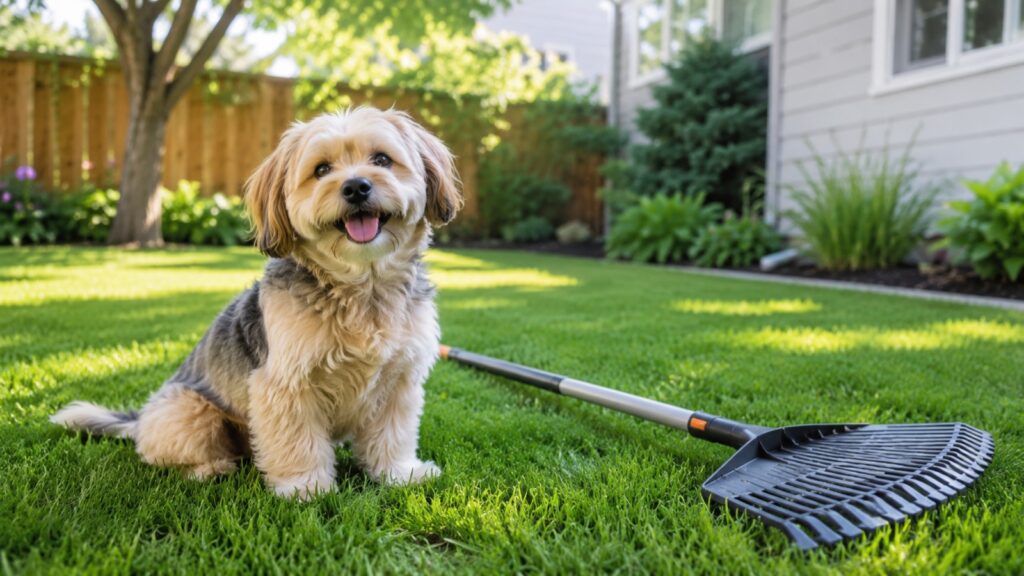
- Use the right tool. A long-handled scooper saves your back and keeps your hands clean. A durable Pooper Scooper metal design won’t bend or snap on hard-frozen ground.
- Bag it properly. Seal waste in thick, tear-resistant bags so nothing leaks in the bin or attracts flies.
- Sanitize high-traffic spots weekly with a pet-safe enzyme cleaner to break down lingering bacteria.
- Rotate your dog’s potty area if possible, so no single patch of lawn takes all the nitrogen damage.
Choosing Bags That Actually Hold Up
Thin grocery bags rip and leak. Purpose-built heavy duty garbage bags resist punctures and lock in odor, which matters most in summer when smell attracts flies, rodents, and neighborhood complaints. A single reliable bag also means fewer bags used overall, which reduces plastic waste.
When Should You Hire a Professional Service?
If you have multiple dogs, a busy schedule, mobility issues, or simply dread the task, a scheduled service pays for itself in reclaimed time. Look for insured, background-checked crews who sanitize their tools between yards to avoid cross-contamination. Many homeowners find that dependable specialists handle the job faster and more hygienically than a rushed weekend effort.
Ask any provider these questions before booking:
- Are you licensed and insured?
- Do you sanitize equipment between properties?
- How do you dispose of collected waste?
- Can I set a recurring schedule that fits my week?
- Do you offer a satisfaction guarantee on missed spots?
Frequently Asked Questions
Is dog poop bad for my lawn?
Yes. Its acidity and high nitrogen content burn grass, leaving yellow patches, while parasites contaminate the soil. It is the opposite of a healthy fertilizer, and buildup only makes the damage worse.
Can I flush dog waste down the toilet?
In many municipalities you can flush waste without the bag, since sewage treatment neutralizes pathogens. Never flush cat litter, and always check your local rules first.
How often should I scoop my yard?
For one dog, twice a week is a good minimum. Multi-dog homes benefit from daily removal to control odor, pests, and health risks.
Does cold weather make waste safe?
No. Freezing pauses decomposition but preserves parasite eggs, which reactivate once temperatures rise in spring, often creating a concentrated mess all at once.
Conclusion
Reliable dog waste removal is not just about a tidy lawn. It is a frontline defense for your family’s health and your community’s water. Whether you build a disciplined weekly routine or hire a trusted crew, the goal is the same: no waste sitting long enough to spread disease. Start this week, and your yard will be safer, cleaner, and finally enjoyable again in 2026.